Clip-In Extensions That Actually Blend With Textured Hair
The whole problem is texture matching. Get that right and placement is easy; get it wrong and no technique saves it.
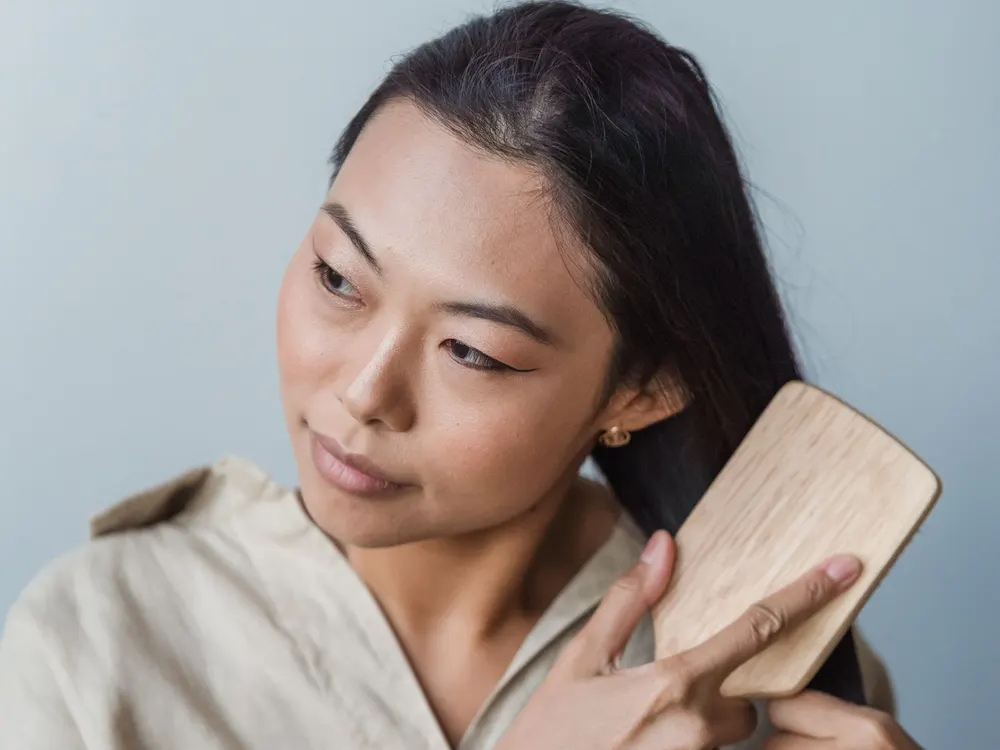
Clip-ins are the most underrated option in this whole category. Ten minutes, no glue, no thread, zero damage when placed properly, and they come out at night. For length at an event rather than as a lifestyle, they are simply the sensible purchase.
The reason they get a bad reputation is that most people buy the wrong texture and then blame the format.
Texture is the whole game
The extension has to match your hair in its styled state, not its natural one.
- Wearing a blow-out? Buy kinky straight, not silky straight. Silky straight next to a blow-out looks like two different heads of hair.
- Wearing your natural curl? Match the pattern — 3C to a 3C extension, 4A/4B to kinky curly.
- Wearing a twist-out? Kinky curly usually blends better than a defined curl, because a twist-out is not a uniform pattern.
Buy one pack first and test it against your hair before committing to a full set. Photographs on product pages are taken on straightened hair under studio light, which tells you very little.
Weight and how much to buy
A full set is typically 7 to 9 wefts, 100 to 160 g. For thick 4C hair, err toward the heavier end — the extensions need enough density to keep up with your own hair, or they read as thin stripes underneath.
For fine or low-density hair, lighter is better. Too much weight on fine hair pulls at the clips and that is where clip-ins actually cause damage.
Placement
- Start low. The widest weft goes at the nape, about an inch above the hairline.
- Work upward in horizontal sections, roughly two inches apart.
- Stop about two inches below the crown. Above that, the extensions have nothing to hide under and the wefts show when you move.
- The two smallest wefts go at the temples, last, and further back than feels natural.
- Tease the roots lightly where each clip sits, or mist with a texture spray — clips slip on smooth hair.
The blend-out that makes it work
Leave the top layer of your own hair out and over the extensions. That top layer is what the eye sees, so it should be entirely yours.
Then treat both together: if you are curling, curl your own hair and the extensions with the same tool and the same technique. Matching the styling matters as much as matching the texture at purchase.
Protecting your own hair
Clip-ins are gentle by design, but not automatically harmless:
- Take them out every night. Sleeping in clip-ins mats both sets of hair and pulls at the roots for eight hours.
- Move the placement by half an inch every few wears, so the same follicles do not carry the weight every time.
- Do not clip onto fragile edges — nothing goes near the hairline.
- Take them out before washing. Always.
Care
Wash every 10 to 15 wears in cool water with sulphate-free shampoo, condition the mid-lengths and ends, air-dry flat or on a hanger, and store them flat in the box or a satin bag. Never bunched in a drawer with the clips open — the clips catch the hair and you spend the next wear detangling.
A good human-hair set survives a year or more of regular wear, which makes them the best value in extensions by some distance.
Clip-ins and ponytails → · The full extensions buying guide →


